Research
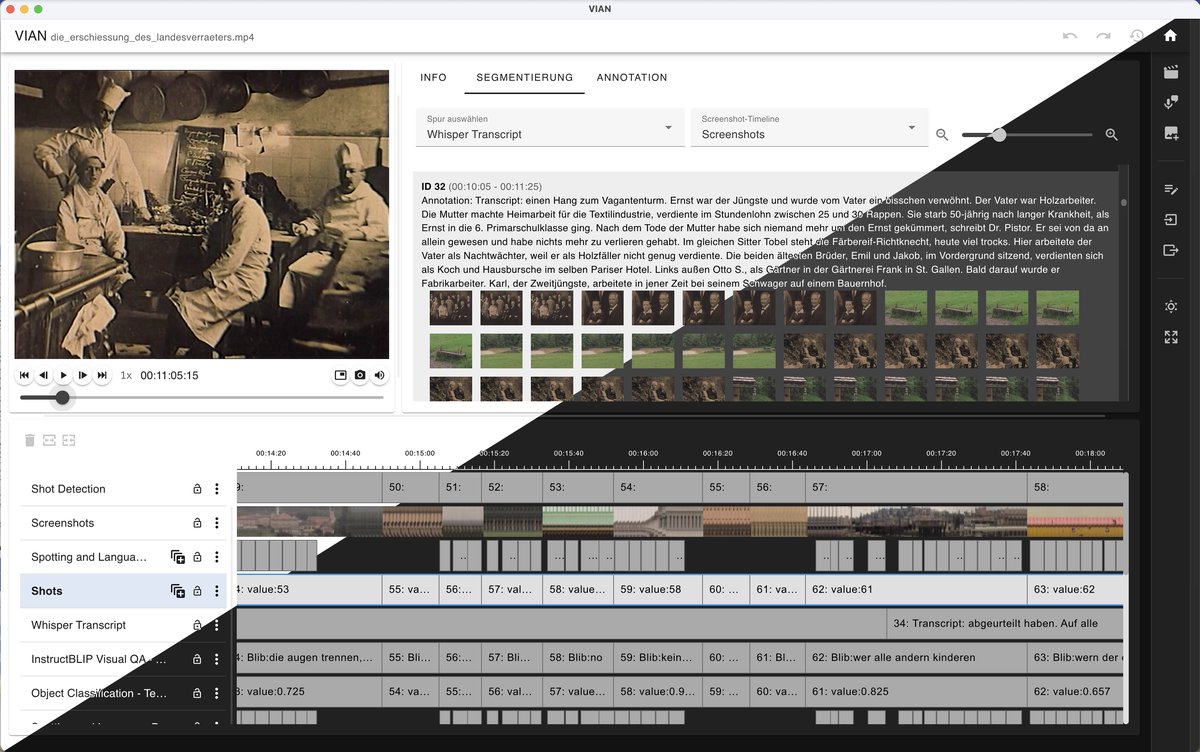
00:01:12:04My research sits at the intersection of film studies, media studies, and digital humanities. I work on audiovisual heritage and preservation, film historiography, and media archaeology — with a particular focus on color film technologies and digital methods for the computer-assisted analysis of multimodal and audiovisual data. I am interested in how historical objects become researchable through digital tools, and in what gets lost or transformed in that process.
Film Color
2017–My research on film color grew out of the SNSF project Filmfarben. Technologien, Kulturen, Institutionen (University of Zurich, with Prof. Dr. Barbara Flückiger), which I joined for my dissertation. The project examined color film technologies across their full material, industrial, and cultural dimensions.
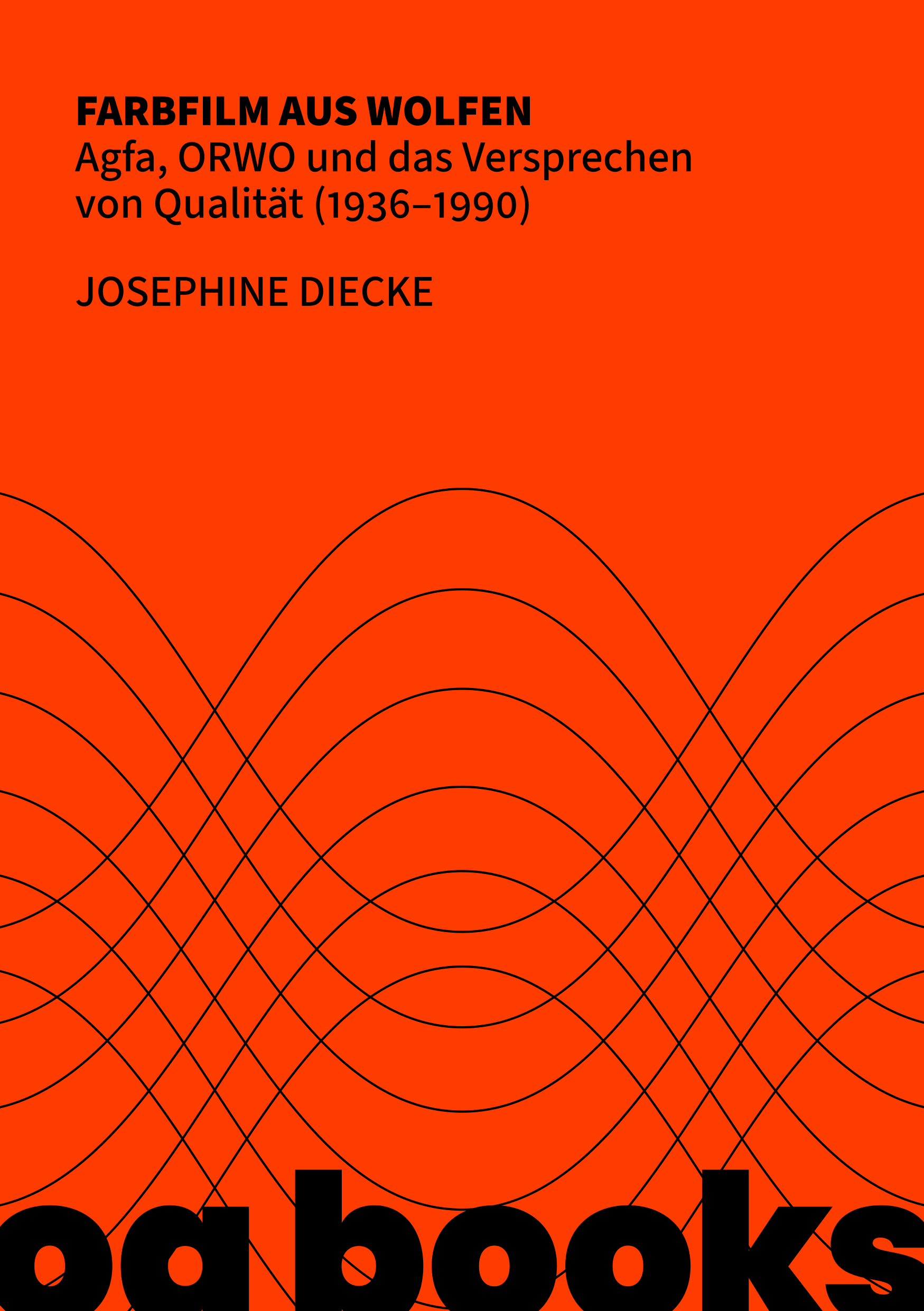
My own focus has been on the East German processes Agfacolor and Orwocolor — their discursive construction as quality standards within the global competition of color film manufacturers from the 1930s to the end of the GDR. This work culminated in the monograph Farbfilm aus Wolfen: Agfa, ORWO und das Versprechen von Qualität (1936–1990), published in 2025 with oa books (open access and print-on-demand).
Selected publications — film color
- Farbfilm aus Wolfen: Agfa, ORWO und das Versprechen von Qualität (1936–1990). oa books, 2025.
- «Raw Film Manufacturing Between Economic Efficiency and Environmental Awareness in East Germany». In: Scholz & Ivanova (eds.), Science Discourses in Cold War European Research Institutions, Cinemas and Media. Berghahn, 2024.
- «Keeping your Enemies Closer. Strategies of Knowledge Transfer at the East German Filmfabrik Wolfen». In: Street & Yumibe (eds.), Global Film Color: The Monopack Revolution at Midcentury. Rutgers University Press, 2024.
- «On #Materiality» (with Bregt Lameris and Laura Niebling). NECSUS, 11 (2), 2022 — special issue editor.
- «Lea aus dem Süden. Ethical and Practical Considerations for Digital Color Transfer» (with Trumpy, Weiss & Flückiger). Journal of Film Preservation, 103, 2020.
Digital Film Studies
2021–A second strand of my work applies and reflects on computational and digital methods in film studies — from large-scale corpus analysis and sentiment analysis of historical film reviews, to practical frameworks for teaching digital methods to film scholars.
This includes work on how digital tools transform historiographical practice: what new questions become askable, what new problems arise, and how methods travel between disciplines. I convene the DHd working group Film und Video and was co-editor of the Open Media Studies Blog at Zeitschrift für Medienwissenschaft (2021–2024).
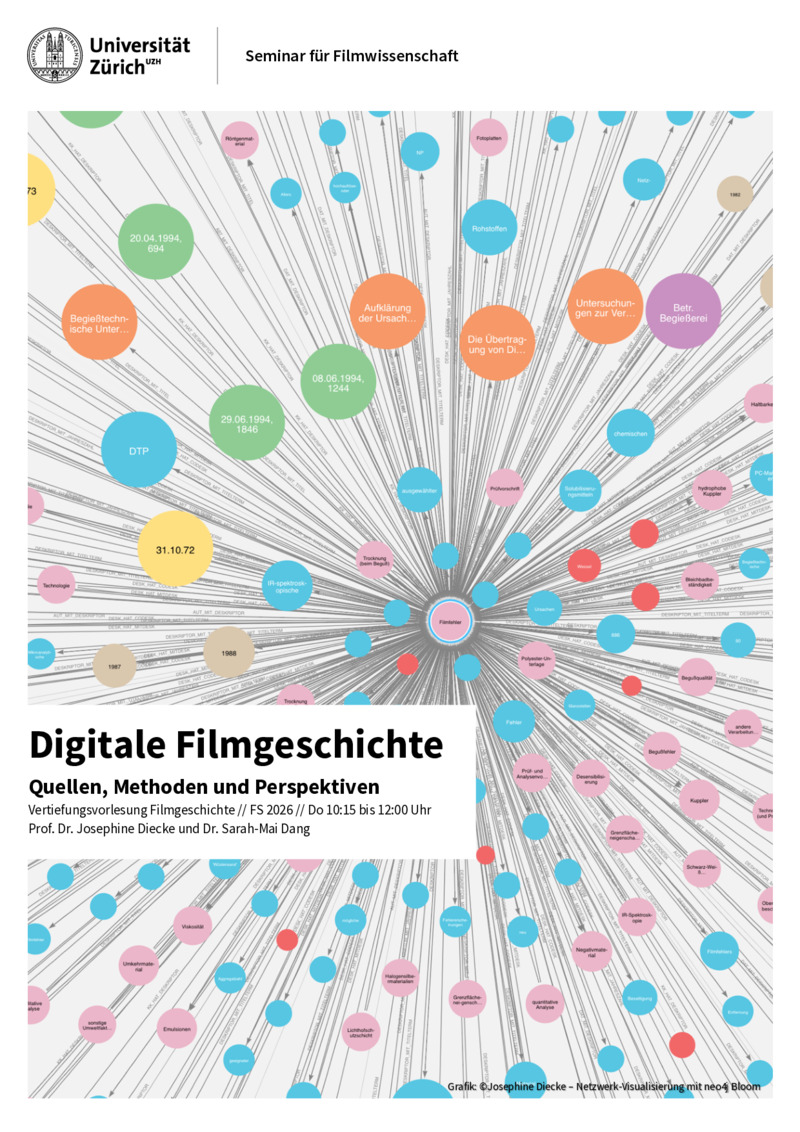
Digitale Filmgeschichte: Quellen, Methoden, Perspektiven
Selected publications — digital methods
- «Revisiting Weimar Film Reviewers' Sentiments: Integrating Lexicon-Based Sentiment Analysis with Large Language Models» (with Isadora Campregher Paiva). Journal of Cultural Analytics, 9 (4), 2024.
- «Managing Tools and Expectations: Dos and Don'ts of Teaching Digital Methods for Film Analysis and Film Historiography» (with Malte Hagener). In: Dang, van der Heijden & Olesen (eds.), Doing Digital Film History. De Gruyter, 2024.
- «Navigating new horizons: Openness, blogs, and media studies» (with Kai Matuszkiewicz). NECSUS, 14 (1), 2024.
Diversity on Screen
ongoingRecent debates on diversity, equity, and inclusion (DEI) — framed through historically situated categories such as gender, race, class, disability, sexuality, and age — have increasingly relied on empirical measurements to render discrimination in film production and representation visible and intersubjectively analyzable. While initiatives such as Lauzen's It's a Man's (Celluloid) World (2024), the Austrian Dritter Film Gender Report (2024), and the Swiss BAK studies Gleichstellung im Schweizer Filmschaffen (2021) and Diversity on Screen of Swiss Films (2025) provide important insights into structural inequalities, they also expose fundamental methodological and epistemological tensions.
Read more
By translating audiovisual representation into measurable categories, these approaches risk stabilizing historically contingent concepts of diversity while flattening cultural complexity, ambiguity, and specificity. They also raise the question of how diversity is not only analyzed but also produced through the methods, categories, and analytical frameworks applied — and to what extent the repeated circulation of quantitative findings translates into sustained institutional change, rather than merely reaffirming existing modes of evaluation.
Taking these developments as a point of departure, my ongoing research asks how film and media studies can critically engage with and expand current approaches to analyzing diversity on and off screen. How can diversity on screen be analyzed in ways that remain sensitive to historical conditions, aesthetic forms, and cultural differences? How stable or transferable are analytical categories across different film cultures and media environments? And how can empirical and computational approaches be meaningfully combined with the critical, context-oriented, and interpretive perspectives central to film and media studies?
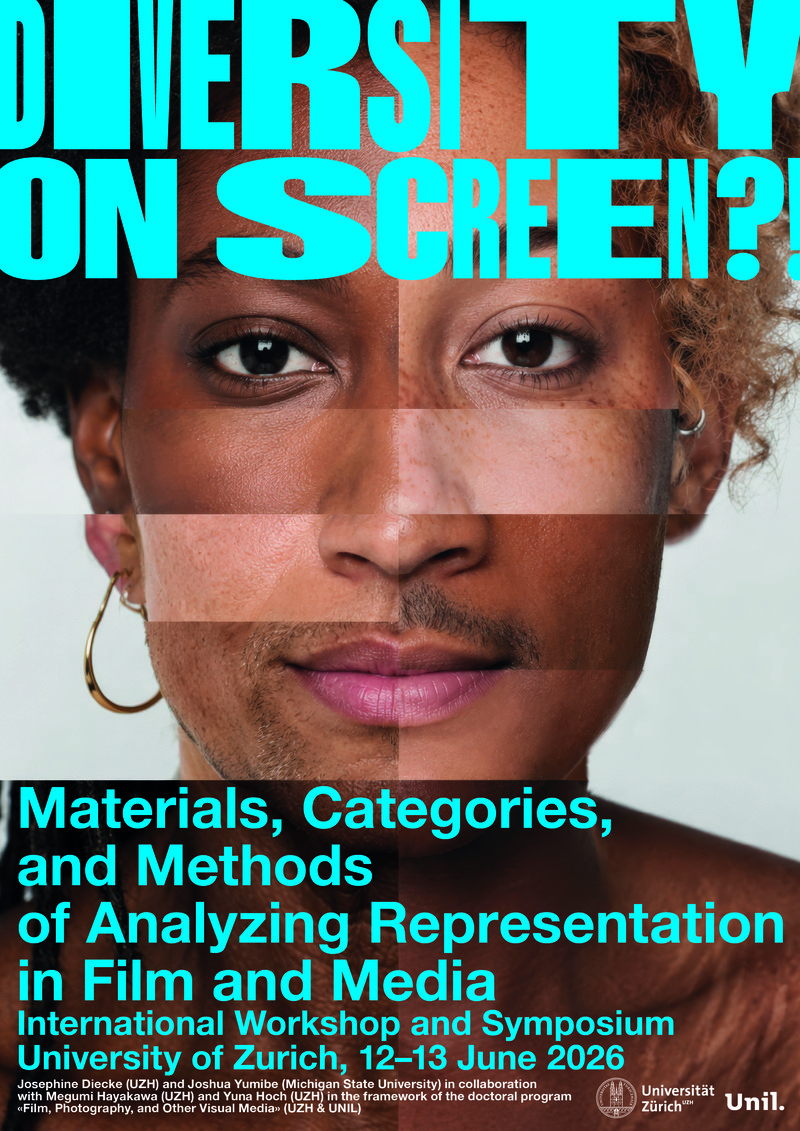
Diversity on Screen?!
Swiss Film Subtitling
2026–2030Swiss Film Subtitling: Historical, Archival and Computational Perspectives — an SNSF research project examining subtitling variants and version-sensitive metadata in Swiss cinema. The project asks how different language versions of the same film travel across distribution contexts and what traces they leave in institutional records.
Developed in collaboration with Prof. Dr. Alexander Künzli and Dr. Sevita Caseres (University of Geneva), combining archival research with computational analysis of subtitle corpora.
→ SNSF grant record